Pelvic pain and sexual health
Pelvic, vulvar or vaginal pain; discomfort during sex; vulvodynia and other situations where pain conditions your intimacy or your daily life.
Advanced integrative physiotherapy

25 years of clinical experience to help you understand what is happening to you and go back to doing what you avoid today.
Perhaps you have stopped running, jumping or laughing for fear of leaking.
You look for the toilet the moment you arrive somewhere.
You avoid sex because the last few times it hurt.
Or you feel your body has never been the same since a birth, an operation or a treatment.
You keep giving things up. Sometimes almost without noticing.
And you end up calling “normal” what is actually holding you back.
You may have seen several professionals, each focusing on one part of what is happening to you.
You may have tests, reports and recommendations.
And still not understand how it all fits together or what you can do to get better.
Or this may be the first time you look for help.
Perhaps you feel well and simply want to know your body better, understand its changes and learn what you can do today to look after yourself.
In the first visit we start by listening to you.
What you notice, how it affects you, what you have tried so far and what you want to achieve.
We look at your symptoms together with your history, your habits and the moment you are living.
So that you understand better what is happening and know where to start.
The Fisiofemenina method
It is a fair question.
But there is something worse than not receiving hands-on treatment: spending months, or even years, waiting while the problem progresses, new symptoms appear and your body learns to live with something that should never have been normalised.
For years I treated women in hospital with very little equipment. And that taught me something important:
The best tools are not on a treatment table.
They lie in understanding what is happening to you, knowing how to read your body’s signals and learning what you can do to help it improve.
My hands can relieve you during a session. But if you learn to recognise what worsens your symptoms, what your body needs and how to act in your daily life, that knowledge stays with you.
I don’t want you to depend on me. I want you to reach the point where you can say:
“I know how to listen to my body. I know what it needs. And I know what to do when something is wrong.”
That is why I never work on a diagnostic label alone. Two women can share the same diagnosis and need completely different paths. Your sensations, your symptoms and the way your body responds give us far more valuable information.
Your body tells us whether we are making progress.
Before focusing on a specific area
Your body does not work in parts.
And neither should your treatment.
I give you the judgement, the tools and the support.
You learn to observe yourself, understand yourself and take an active part in your recovery.
Because the goal is not for you to need more sessions.
The goal is for you to need me less and less.
How I can help
What limits you today may go by different names. What matters is understanding how it affects your life and what we can do from there.
Pelvic, vulvar or vaginal pain; discomfort during sex; vulvodynia and other situations where pain conditions your intimacy or your daily life.
Urine leaks, a feeling of heaviness, lack of control or confidence when coughing, laughing, jumping, running or training.
Changes in your abdomen, pelvic floor, posture, strength or the way you feel your body during these stages.
Discomfort, tightness, loss of mobility or insecurity after abdominal, pelvic or breast surgery.
Recovering mobility, tissue and body confidence after surgery or other treatments related to breast cancer.
Information, therapeutic exercise, self-care and support to understand the condition better and take an active part in managing it.
It is about regaining freedom in your everyday life.
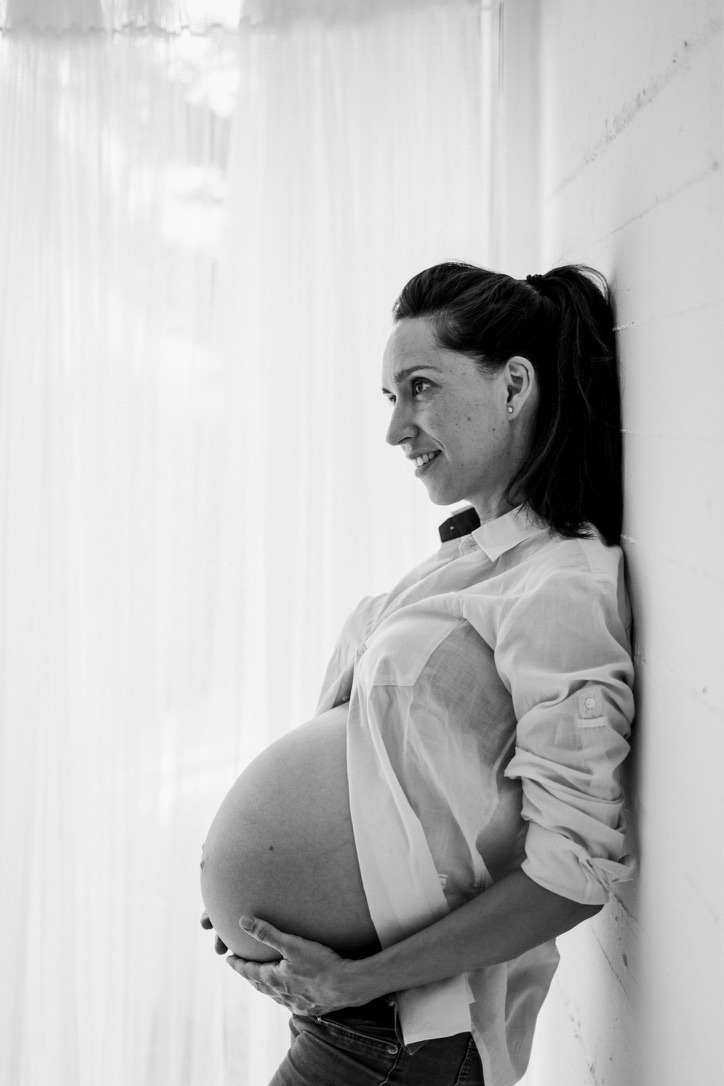
For the last 25 years I have trained, worked and lived around a single obsession: improving my own health and that of the women I treat.
My curiosity began long before I knew I would end up doing this.
As a child, few things at school held my attention. But when we talked about the human body, the mind or the way we relate to each other, something lit up inside me.
Dancing was my therapy.
Reading about health and wellbeing in my mother’s magazines was my ritual before sleep.
I studied Physiotherapy because it was the degree closest to everything that fascinated me: health, the body and movement.
And I fell in love with the profession from day one.
During my degree something happened that would change my course: I developed vulvodynia.
At that time, finding answers was not easy. Pelvic floor physiotherapy was still largely unknown in Spain. Many women lived in silence with pain, urine leaks or other symptoms. Frequent situations, but not normal for that, often lived with shame and without knowing where to ask for help.
I too needed to understand what was happening to me.
So I started searching.
I trained in the different areas related to the pelvic floor: urology, gynaecology, physiosexology, coloproctology and obstetrics. One course led to another and, almost without noticing, my health problem became the start of my specialisation.
Twenty years ago that path took me to Vall d’Hebron University Hospital, where I have worked as a physiotherapist specialised in women’s health, abdominal-pelvic-perineal rehabilitation, breast oncology, lipoedema and lymphoedema.
I also worked in private practice alongside urologists and gynaecologists.
And for nine years I taught at several universities. Among other projects, I took part in creating the first course on physiotherapy applied to aesthetic medicine and plastic and reconstructive surgery.
Working with women I understood something even more important:
the body rarely tells a simple story.
Pain does not always start where it hurts.
A scar does not affect the skin alone.
And a symptom cannot be separated from the diet, rest, hormones, stress, emotions or history of the woman in front of you.
I was missing a piece that connected all of it.
I found it in clinical psychoneuroimmunology and evolutionary medicine. First they helped me understand and improve my own digestive problems. Then they completely transformed the way I support other women.
Later I added tools from neuro-linguistic programming and brief therapy.
In my first placement report I had already written a conclusion that still guides the way I work today:
Sometimes, listening helps more than any technique.
That is why I do not see physiotherapy as a collection of isolated treatments.
For me, treating means observing.
Asking.
Connecting what at first sight seems unrelated.
And listening long enough to understand what the body is trying to say.
Fisiofemenina was born from that whole journey.
From the professional who has worked in women’s health for more than two decades.
From the patient who also had to look for her own answers.
From the teacher, the mother and the woman who keeps learning.
This is where I put my experience, my attention and my judgement at the service of other women. With time, honesty and an integrative view.
Because you do not need someone to promise you magic solutions.
You need to be listened to, to be understood as a whole, and to be helped to find a path that makes sense for you.
Welcome to Fisiofemenina.
Registration number: 3878
Book my first visitFirst visit by video call
90 minutes · €120
A session with time to hear your story without rushing, review your history and reports, connect the factors that may be involved and agree on the next steps.
By the end you will have a clearer idea of what we are looking at, what you can start doing and whether you need any further assessment.
Programmes
After breast cancer surgery
A recovery and prevention programme for after-effects following breast cancer surgery. You do not need to wait for symptoms to start looking after yourself.
In these three sessions we will work on:
A plan adapted to you so you know what you can do and how to keep looking after yourself at home.
Postpartum
Perhaps you want to exercise again but do not know what you can do or how to progress.
In these two sessions I help you to:
So you know where to start and how to keep looking after yourself at home.
Care after prolapse surgery
If you have had surgery for a cystocele or rectocele, this programme helps you look after your recovery and work on the factors that can lead to the prolapse returning.
In these three sessions you will learn to:
Care you will learn in the consultation and can build into your daily life.
You choose the type of consultation, the day and the time. I personally send you an email with the payment link.
Once payment is made I will ask you to send me the most relevant information and, if you have them, the reports or tests you would like us to review.
We will have time to talk about your history, your symptoms, your habits and anything that can help us understand the whole picture.
We will define priorities, recommendations and next steps adapted to you. If you need a medical, in-person or other professional assessment, I will tell you so.
Book an appointment and, before paying, tell me your doubts by replying to the email.
Clinical questions we will look at together during the visit.
The 90-minute first visit by video call. That time allows me to get to know your history, review your situation as a whole and agree where to start without rushing.
No. The 60-minute follow-up by video call is meant for women I am already working with.
No. The recovery programmes after breast cancer surgery, postpartum and prolapse surgery can be booked directly. The first session of each programme is devoted to getting to know your case.
My hands can relieve you during a session. Understanding your body helps you for life. In the consultation you learn to read your signals, to know what improves and what worsens your symptoms and what you can do day to day. If your case needs hands-on treatment, I will tell you.
No. If you have reports or tests, we will review them together. If you don’t, we will start from your history and assess whether you need to see another professional.
If I consider that your case requires an in-person examination or procedure, I will tell you clearly and recommend the right professional.
Find a quiet place with a good internet connection and enough privacy. Have any relevant reports at hand and write down the questions you want to resolve.
The booking button takes you to my calendar, where you choose the type of consultation, the day and the time. I then personally send you an email with the payment link, and the appointment is confirmed once payment is made. You will receive the confirmation and the video call link by email.
Yes, as long as you do so at least 24 hours in advance by replying to the confirmation email. After that, the consultation fee is not refunded.
No. The consultation does not replace medical care, diagnosis or in-person treatment when they are needed.
Fisiofemenina does not provide an emergency service. If you have severe symptoms or need immediate care, contact the emergency health services.
You just need a good place to start.
We can begin by listening to your story, connecting the pieces and deciding the next step.
With time, honesty and an approach adapted to you.
Welcome to Fisiofemenina.
Physiotherapist · Registration number 3878